
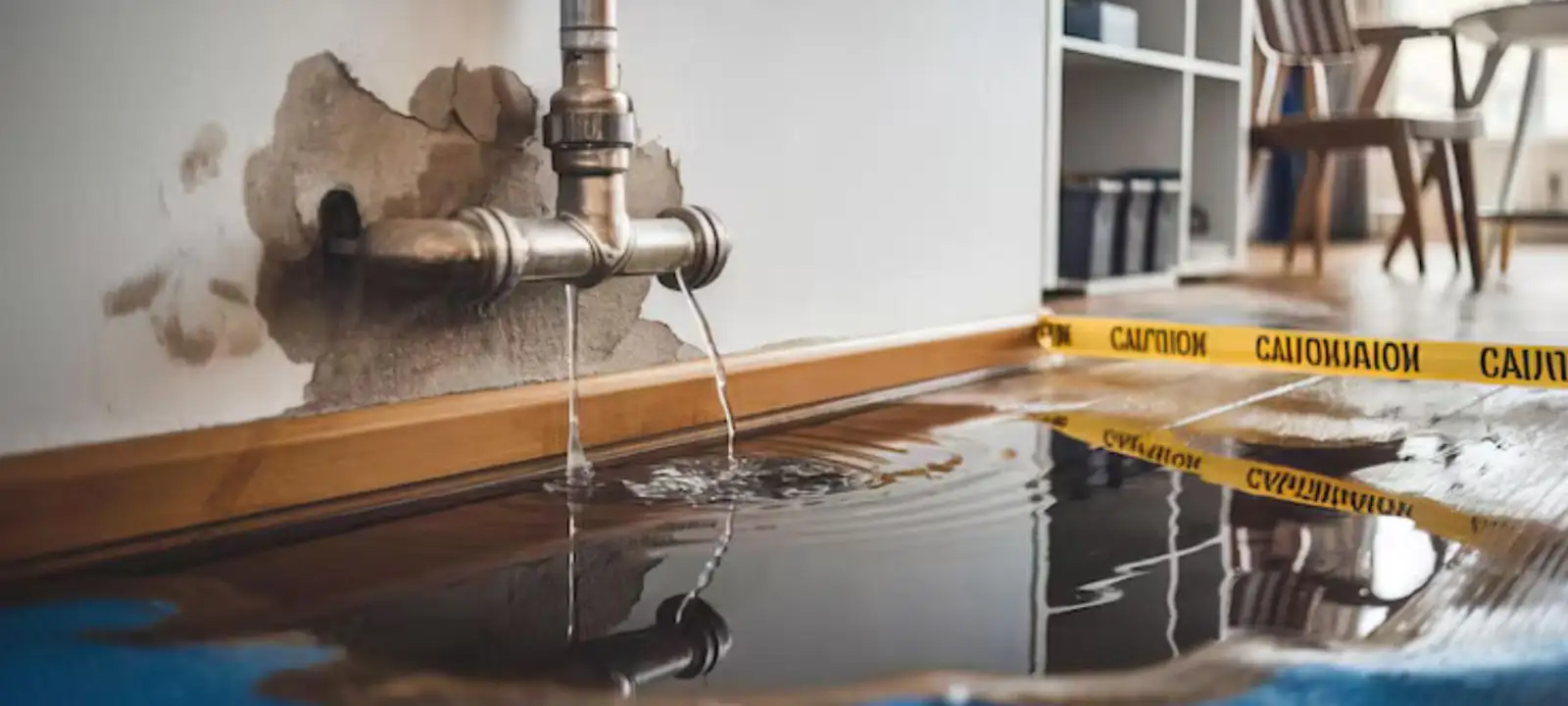
My wall is wet and I do not know what this is called
If you searched for a wet wall, a soaked carpet or a spreading ceiling stain, mitigation is the service you are looking for. The word means limiting the damage, not rebuilding. A crew finds where the water went, takes it out and dries the building before mold or rot can start.
The people who call us often describe it plainly: a leak under the sink that ran for hours, a condensation line that backed up into a closet, or a supply hose that let go while nobody was home. All of those begin as mitigation jobs.
When standing or spreading water is an emergency
Water that is still moving is an emergency, and so is any wet area near electrical panels, outlets or appliances. Call 911 or your utility for any electrical or gas risk before you call us. After that, our 24/7 line can walk you through the next safe steps while a crew is arranged. Same-day and after-hours dispatch is offered when available.
While you wait for the crew
- Shut off the main water valve or the fixture valve.
- Cut power to the wet room only if you can reach the breaker panel dry.
- Lift valuables, shoes, cords and small rugs off the floor.
- Open cabinet doors under the sink so air can reach the wet cabinet base.
- Photograph the area before anything is moved.
How we assess water damage
The assessment answers three questions: where did the water come from, how far did it travel and which materials are wet. A technician uses a moisture meter to read drywall, wood and flooring, and a thermal imaging camera to find cool, wet cavities behind finished walls. Each reading is recorded so drying can be compared against a starting point.
Water moves along studs, under baseboards and through floor transitions. A leak in a bathroom can show up in the hallway closet or in the unit below. That is why a mitigation assessment checks the neighboring rooms and the rooms underneath.
Structural drying
Structural drying is the engineering part of the job. Air movers push dry air across wet surfaces, low-grain refrigerant dehumidifiers pull moisture out of the air and wet cavities are opened or injected so air can reach them. A fan on the floor is not drying a wall, and a dehumidifier without sealed doors and windows cannot keep up.
Equipment is checked every visit. Readings are compared with the first day, equipment is moved to the wettest spots and the job ends when the structure reads dry. Humidity, temperature and the reading of an unaffected reference material tell the technician what dry means in your home.
| Equipment | What it does | Why it matters |
|---|---|---|
| Moisture meter | Reads moisture in drywall, wood and flooring | Finds wet areas that look dry and proves they are dry later |
| Thermal camera | Shows temperature differences behind surfaces | Points to wet cavities so less material is opened |
| Air movers | Push air across wet surfaces | Speeds evaporation from floors and wall bases |
| LGR dehumidifier | Removes moisture from the air | Keeps the air dry enough that materials keep releasing water |
| Extraction unit | Pulls standing water from floors and carpet | Removes the bulk of the water before drying begins |
Need a crew to map and dry the damage? The emergency line is open 24/7.
☎ (949) 670-0939Mitigation versus cleanup versus repair
Mitigation stops the damage, water damage cleanup removes and sanitizes what the water contaminated and water damage repair rebuilds. Many jobs use all three in order. If the loss involves sewage or storm water, read about flood damage restoration because those jobs have stricter safety steps.
What affects the cost of mitigation
The water category, the size of the wet area, the materials involved and the number of drying days all change the cost, and so does the amount of equipment needed. The EPA advises drying water-damaged areas and items within 24 to 48 hours to prevent mold growth, which is why delay usually raises the scope. We explain scope and price before work starts, and we do not quote a number we cannot support.
Insurance notes
Sudden and accidental water, such as a burst pipe or failed appliance, is often covered by a homeowners policy, while a slow leak left alone is often not. The California Department of Insurance says to report damage to your agent to start a claim. Check your policy or ask your insurer, and keep the moisture readings and photos we record.
Mitigation in Aliso Viejo homes and condos
Many Aliso Viejo buildings are two or more stories with shared walls, so water from one unit can reach the next. If you are a tenant or an HOA member, tell the property manager the same day and ask who authorizes drying in shared areas. Early drying protects the neighbor below as well as your own floor.
The wet season runs mostly from winter, and the NWS record for the former El Toro station shows January through March as the heaviest months. Roofs, window seals and sliders are common entry points in that period. We run the same 24/7 line for Laguna Hills, which shares a border with Aliso Viejo.
Common questions
Do you handle water mitigation emergencies at night or on weekends in Aliso Viejo?
Yes. The 24/7 line answers at night, on weekends and on holidays. Call, describe what is wet and the dispatcher will tell you what to shut off while a crew is arranged. Same-day response is offered when available.
What is the difference between mitigation and restoration?
Mitigation is the emergency work: stopping the damage, removing water and drying. Restoration is the full return to pre-loss condition, including repairs. Mitigation comes first and is done as early as possible.
How long does structural drying take?
It depends on the materials, the water category and the humidity. The job ends when moisture readings of the affected materials match a dry reference, not on a calendar date. Your technician shares readings at each visit.
Do I have to leave my home during drying?
Often you can stay, though the equipment is loud and warm. If the loss involved sewage or storm water, or if the technician needs to open large areas, we may ask you to stay out of those rooms.
Is drying equipment needed if the surface looks dry?
Yes, if readings show moisture in the wall or floor. A surface can look dry while the cavity behind it stays wet, which is how mold ends up in a wall that no one noticed.