
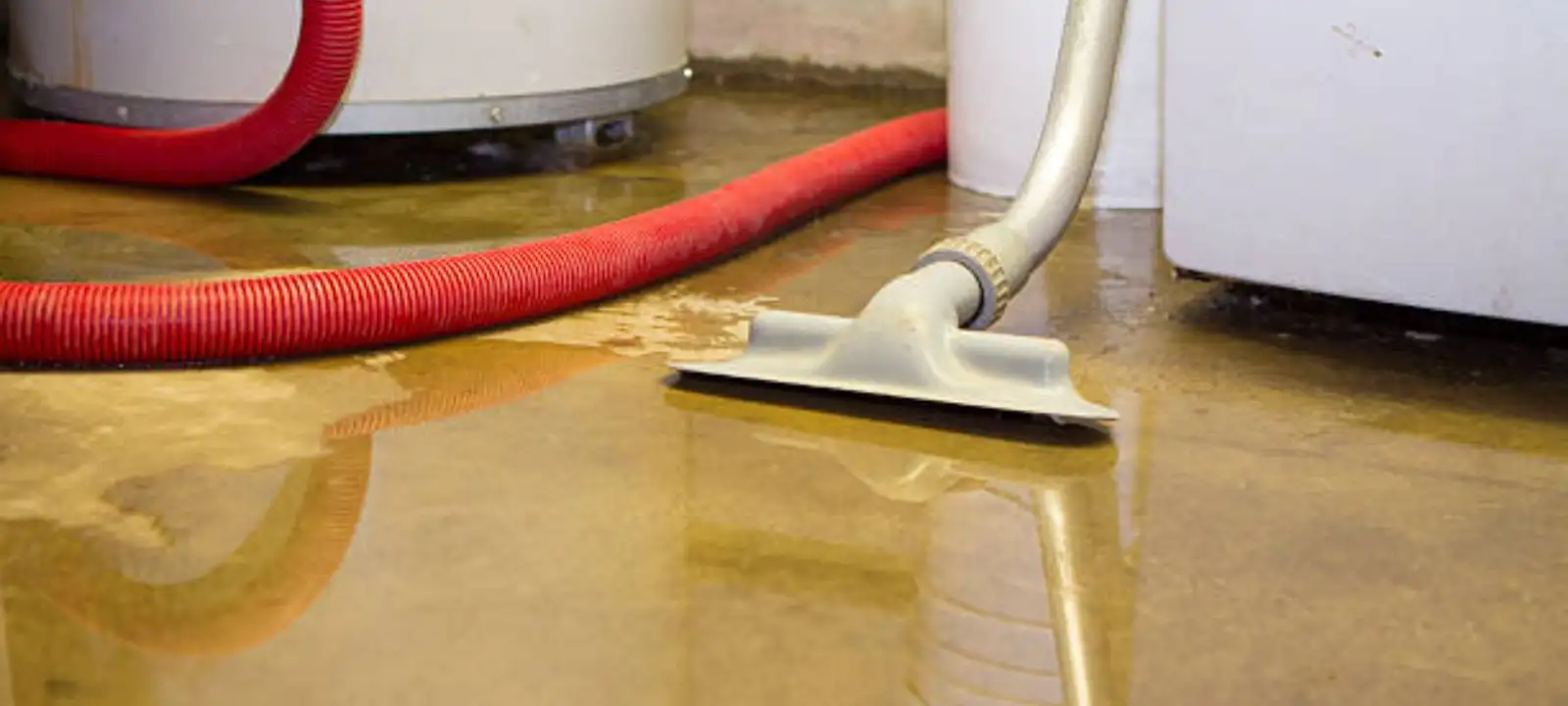
Washing machines fail in a few predictable ways. A supply hose bursts at the connector, a valve at the wall starts to drip, the drain hose slips out of the standpipe or the machine overflows during a drain cycle. Each one puts water on the floor, but not each one puts the same kind of water there, and that difference drives what can be dried and what must come out.
This guide is written for Aliso Viejo, where many laundry closets are on upper floors and many residents rent or share walls. It covers the first steps, the water types, the materials at risk and who to tell. If water is still moving, call the 24/7 line first.
First steps when the washer is leaking
Turn off the machine and unplug it only if the outlet is dry and you can reach it without standing in water. Close the two supply valves behind the machine. If they will not close, shut off the main water valve. Open the door of the laundry closet so the water has somewhere to go and air can get in.
Lift baskets, detergent and clothes out of the water. Take photos of the floor, the walls and the machine before you wipe anything. Then use towels to stop the water from running out of the laundry room into carpet or hallways.
Supply leak or drain leak: why the water type matters
A supply hose or valve leak puts clean tap water on the floor. A drain leak or an overflow puts used wash water on the floor, and that is treated as more contaminated. The water category determines whether pad, drywall and flooring can be dried in place or must be removed.
| Leak type | Water category | Usually dried in place | Usually removed |
|---|---|---|---|
| Supply hose or wall valve | Category 1 | Vinyl, tile, many hard floors, drywall caught early | Wet carpet pad, saturated insulation |
| Overflow during a wash cycle | Category 1 or 2, depending on content | Hard floors, baseboard if treated quickly | Carpet pad, drywall at the floor line |
| Drain hose or standpipe leak | Category 2 | Some hard surfaces after cleaning | Porous materials that soaked |
| Sewage-contaminated overflow | Category 3 | Sealed hard surfaces after cleaning | Carpet, pad, wet drywall |
Categories follow the ANSI/IICRC S500 standard. Time can raise a category, so a clean leak that sits for days may be treated as dirtier.
Most laundry leaks are Category 1 or 2. If the drain line backs up with sewage, stay out and treat it as Category 3. Our water damage cleanup page explains how those materials are handled.
What dries and what comes out
Laundry rooms often have vinyl or tile flooring with a plywood subfloor under it. Vinyl sheet can trap water underneath, so a floor that looks dry on top can still be wet below. A moisture meter and a thermal camera check the subfloor and the wall base without lifting everything.
Drywall near the floor wicks water quickly, usually a few inches up the wall. If it is firm, clean and dried fast, it can sometimes stay. If it is soft, stained or was exposed to dirty water, the bottom section is cut out. Baseboards swell and are often replaced. Carpet in an adjoining hallway can sometimes be dried, and the pad under it is often replaced.
Water travels
Water from an upstairs laundry closet usually moves down through the floor and into the ceiling below. A stain on the ceiling can show up days after the leak, so check lower floors and neighboring units.
Washer leak on an upper floor? Call the 24/7 line before water reaches the ceiling below.
☎ (949) 670-0939The extra steps for upstairs and condo laundry rooms
If the leak is on an upper floor, tell the unit below at once. Knock on the door or leave a note. Water can reach their ceiling light fixtures and wall outlets, which is an electrical risk for them. Ask them to stay away from wet fixtures and to call the HOA or property manager.
In a condo, the washer line may be a shared supply or have a unit shutoff in a utility closet. Ask your HOA or property manager where the shutoff valve is and who is allowed to close it. Keep all communication in writing so you have a record of who knew what and when.
Drying equipment and timing
The crew extracts standing water, pulls up wet pad or baseboard where needed and sets air movers and a dehumidifier. Drying a laundry closet and the adjacent rooms usually takes several days, and readings tell the crew when to stop. The EPA advises drying water-damaged areas and items within 24 to 48 hours to prevent mold growth, so calling the same day matters. See water mitigation for how structural drying works.
Prevention that costs very little
- Replace rubber supply hoses with braided stainless hoses and check them yearly.
- Close the supply valves when you leave on a trip.
- Check that the drain hose is secured to the standpipe and that the standpipe is not blocked.
- Do not stack items against the washer where a leak would go unnoticed.
- Consider a drain pan under the machine in a laundry closet or on an upper floor.
These steps do not remove the risk, but they make a failure easier to catch. If you live near Lake Forest or Laguna Niguel, the same checklist applies.
Common questions
Can I dry a washing machine leak myself with fans?
For a very small spill on a hard floor, towels and a fan can be enough. For anything that reached the wall, pad or a neighboring room, the moisture is often hidden. A technician can check with a meter and a thermal camera.
Is a washer overflow considered contaminated water?
A supply leak is usually clean water. An overflow or drain leak carries used wash water and is often treated as Category 2, which changes what can be dried in place.
What should I do if my washer leaks into a unit below in my Aliso Viejo condo?
Shut off the water, tell the neighbor and the HOA or property manager at once and call our 24/7 line. Keep photos and written notes about the time and the rooms affected. Ask in writing who authorizes drying and repairs.
How long will drying take?
Usually several days, depending on the floor, the walls and the humidity. The crew ends the job when readings match a dry reference, not on a fixed date.
Do you replace the hose or valve?
No. We restore the damage the water caused. A plumber or appliance technician should replace the hose, valve or drain connection.