
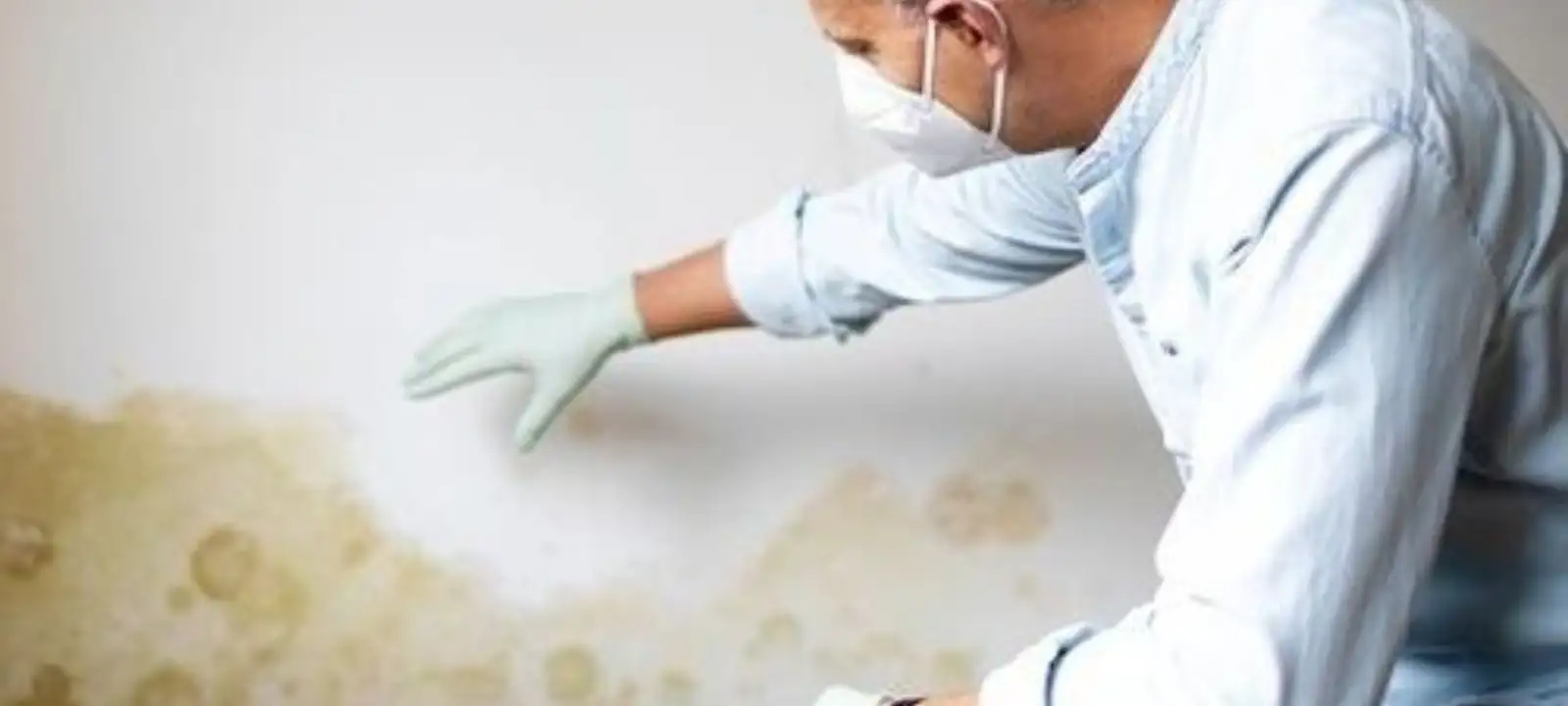
Most wall leaks are quiet for a while. A small pinhole in a copper line, a weeping valve or a loose drain can wet a wall cavity for weeks before the surface changes. By the time paint bubbles, the damage has been going on for some time. This guide lists the signs, explains how to check for a hidden leak and describes what a technician looks at.
Signs you can see
- A stain on a wall or ceiling that is brown, yellow or tan, often with a ring around the edge.
- Paint that bubbles, blisters, peels or cracks in a line.
- Drywall seams that open, show shadows or look raised.
- Baseboard that swells at the bottom or separates from the wall.
- A bowed or sagging wall, or drywall that feels soft when pressed.
- White crusty mineral deposits near a pipe, valve or fixture.
- Warped cabinet bases or flooring next to the wall.
A single sign may not mean much. A stain with nothing else may be old. Two or three signs together, especially soft drywall and a musty smell, point to moisture that is still active.
Signs you can smell, hear or feel
A musty or earthy smell in a room with no visible stain often means moisture is trapped in the wall. The smell is stronger in the morning in a closed room. It is worth tracing, because it points to a wet cavity that cannot dry on its own.
Sounds matter too. A faint hiss or drip behind a wall when no fixture is running can be a pressurized leak. A wall that feels cool or damp to the touch, or a floor that feels warm with no heat source, can be a sign of a hot water line leak.
The water meter and bill check
The water meter is the easiest way to find a hidden leak. Turn off every fixture and appliance, then look at the meter. If the dial or the small leak indicator keeps moving, water is flowing somewhere.
A bill that jumps with no change in use is the second clue. Compare the last few bills, and ask the water district if you are not sure how to read the meter. A leak on the house side of the meter is yours to fix, and a pro can help find it.
| Clue | Where to look | First action |
|---|---|---|
| Meter moves with everything off | Supply lines, water heater, irrigation, toilet fill valve | Shut off the main valve and call a plumber and a restoration crew |
| Musty smell, no stain | Closets, vanity cabinets, walls behind appliances | Open the space, check with a meter and thermal camera |
| Bubbling paint | Walls under bathrooms or roof edges | Find the source above and measure moisture |
| Warm spot on wall or floor | Hot water lines in slab or wall | Call a plumber to test the line |
| Higher bill with no change in use | Whole property | Check the meter, then check fixtures one at a time |
Clues are not proof. Measurement confirms the source and the wet area.
What a moisture meter and thermal camera find
A technician uses a moisture meter to read drywall, wood and flooring. A reading higher than a dry reference point means the material is wet. The reading is recorded so drying progress can be compared.
A thermal camera shows temperature differences behind a surface. Wet material is usually cooler than dry material, so the wet area shows up as a shape. It helps find the edge of the damage so less material is opened.
Neither tool replaces looking. A technician also checks fixtures, shutoff valves, supply lines, the underside of cabinets and the room above. Water travels, so the visible sign and the source can be in different rooms.
See one of these signs? Call the 24/7 line and describe it.
☎ (949) 670-0939First steps when you suspect a leak
- 1
Shut off
Close the fixture valve or the main water valve.
- 2
Photograph
Take dated photos of stains, bubbles and the meter.
- 3
Open
Open cabinet doors and move furniture from the wall.
- 4
Call
Call a crew to measure moisture and explain scope and price.
Do not cut into a wall yourself unless you know where wires and pipes run. Do not run a space heater or a hair dryer on a wet wall, because it dries the surface and leaves the cavity wet. If the area is near outlets, turn off power only if the panel is dry and reachable.
Hidden leak or condensation?
Not every wet spot is a pipe leak. Condensation forms on cold surfaces such as an air conditioning line, a cold water pipe or a poorly insulated wall. The wet spot is usually on the surface, it comes and goes with the weather and the pipe may be sweating.
A real leak keeps wetting the same area and gets worse. If you are not sure, a technician can tell the difference with a meter and a camera. The answer matters because the fix is different.
Why speed matters and what to do next
Wet materials start to support mold if they stay wet. The EPA advises drying water-damaged areas and items within 24 to 48 hours. If you see the signs above, the clock may already be running.
The next step is water mitigation, which finds and dries the moisture. If water is on the floor right now, emergency water removal is the right page. For the rebuild afterward, a repair crew replaces what could not be dried.
We also see hidden wall leaks in Laguna Hills and Lake Forest, and the signs are the same.
Common questions
How can I tell if there is a leak inside a wall?
Look for stains, bubbling paint, soft drywall, swelling baseboards and a musty smell. Then turn off all fixtures and check whether the water meter still moves. A moisture meter and thermal camera confirm the answer.
Does a musty smell always mean mold?
No, but it means moisture is likely trapped somewhere. Find and dry the source first. If mold is present, it needs a separate assessment.
Can I check the wall with a meter bought at a hardware store?
A basic meter can show a wet area, but the readings can be misleading on different materials. A technician uses a meter with a dry reference and a thermal camera, and records the readings.
Can a hidden leak be fixed without opening the wall?
Sometimes a small opening is enough to dry the cavity. Others need a larger cut so the framing can be dried and checked. A crew explains scope and price before work starts.
Who do I ask in Aliso Viejo whether a wall repair needs a permit?
Start with the City of Aliso Viejo Building & Safety office at (949) 425-2540. The city pages we reviewed did not say whether replacing wet drywall needs a permit, so ask before a larger rebuild.