
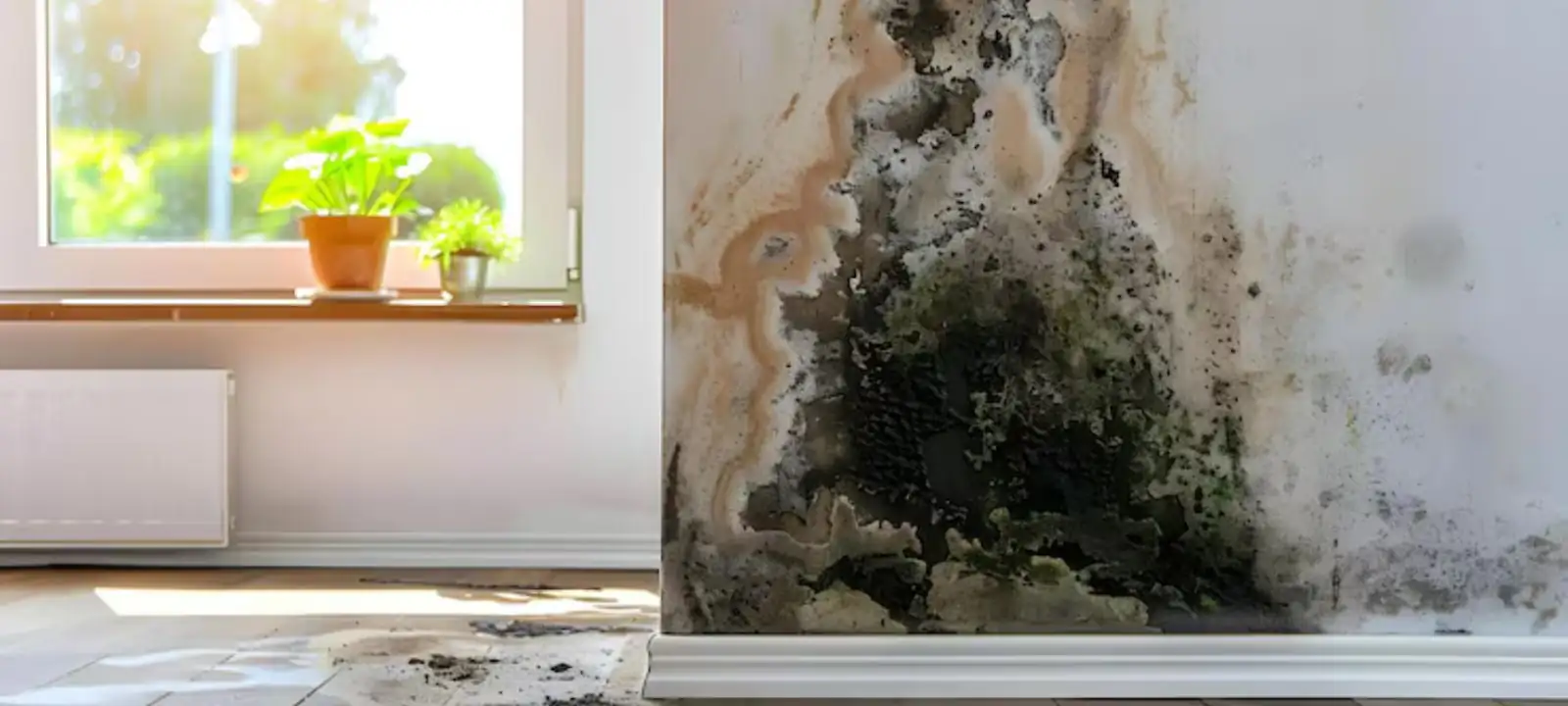
The call usually starts the same way. Someone pulled a box out of a closet, moved a dresser or looked up at the corner of a shower ceiling and saw dark spots. A few days earlier there was a leak, maybe from a toilet upstairs, a sink supply line, a roof or an air conditioner line. Now the wall looks wrong.
This guide walks through what to check, what you can handle and what to write down. The order matters, because mold is a result and the water is the cause.
Find the water before you judge the mold
Closet walls often share a plumbing chase, an exterior wall or an attic with something that can leak. If the closet sits under a bathroom, start with the toilet supply line, the shower valve and the drain. If it sits on an exterior wall, check the roof edge, the window above and the siding. If an air handler is nearby, check the condensate drain.
- Feel the wall at the bottom edge and at the corner with the back of your hand. Cool or damp means moisture.
- Look for a stain ring on the ceiling or wall above the spots.
- Smell the closet. A musty smell without visible mold often points to wet material behind the wall.
- Check whether the carpet or baseboard is damp.
- Ask whether anyone has noticed a drip, a gurgle or a water bill that jumped.
Until the source is fixed, cleaning the spots is a short fix. A technician can find hidden moisture with a meter and a thermal camera, which is much faster than opening walls at random.
The 10 square foot guideline
The EPA says cleanup is usually something a homeowner can do if the moldy area is less than about 10 square feet. That guidance assumes the moisture problem is fixed and the material is something that can be cleaned, such as a hard surface. Follow the EPA guide for cleanup steps and protective gear.
It does not assume mold inside the wall, soft drywall or an area that keeps coming back. Those need a closer look.
| What you see | Likely path | Why |
|---|---|---|
| A small spot on a hard surface, source already fixed | Homeowner cleanup following EPA guidance | Small, surface-level, moisture gone |
| Stain or spots on drywall that feels soft | Call a crew | Drywall is porous and the wall may be wet inside |
| More than about 10 square feet | Call a crew | Above the EPA homeowner guideline |
| Musty smell, no visible mold | Moisture assessment | A wet material may be hidden |
| Spots return after cleaning | Find the moisture source | Moisture is still feeding the area |
| Rental or condo unit | Notify the manager in writing first | Others may control the repair |
Mold in a closet after a leak? Call the 24/7 dispatch line.
☎ (949) 670-0939What not to do
Do not paint over the spots. Paint hides the problem and leaves the moisture source in place. Do not sand or dry-brush the wall, because that scatters dust. Do not seal the closet and walk away, because a wet wall needs air and drying equipment.
Do not pull out large sections of drywall before taking photos. Dated photos of the wall before and after you open it help a property manager or insurer understand what happened.
What a crew does
The crew reads moisture, opens the wall past the damp edge and removes materials that cannot be cleaned, such as wet insulation and soft drywall. The area is contained so that dust stays in the work zone, and surfaces are cleaned. Once the wall is dry and clean, water damage repair covers new drywall, paint and trim.
The industry standard for mold remediation is ANSI/IICRC S520. It is a published standard, and you can ask any company whether its crews work to it. The mold remediation page explains containment, testing and clearance in more detail.
After the wall is clean and dry
Once the repair is done, keep stored items off the floor and a few inches away from exterior walls so air can move. Check the closet corners and the bottom of the wall every few weeks for the first season. A new dark spot, a damp smell or a soft patch is a reason to look for a new leak right away.
Paperwork for a landlord or HOA
If someone else owns the building or manages the shared walls, your paperwork is your protection. Send the first notice in writing, by email or by letter, the day you find the problem. Include the date you noticed it, the location, a short description and photos.
- Dated photos of the stain, the spots and the wall before it is opened.
- A copy of every message you send and every reply you get.
- The date the leak started or was first noticed, and the date it was fixed.
- Names of anyone who inspected it and what they said.
- Receipts for anything you paid for, such as drying or cleaning.
Ask who authorizes the repair and who pays. Do not assume. If an insurer is involved, ask the property manager whether the building has a claim open.
Where we work
The same checklist works in Laguna Hills and Laguna Niguel, and our 24/7 line covers both. Health questions belong to a physician, not to a restoration company, so speak to your doctor if you are concerned about symptoms.
Common questions
Is a few dark spots in my closet always mold?
Not always. Dust, stains and mildew can look similar, and color alone does not tell you what it is. A technician with a moisture meter can tell whether the area is wet and whether it needs more than cleaning.
Can I just wipe it off?
For a small spot on a hard surface after the source is fixed, the EPA says homeowners can usually handle it. If the wall is soft, the spots return or the area is larger, call a crew.
Should I move my clothes out of the closet?
Yes, if you can do it safely. Wash or dry clean items that were damp, and discard cardboard boxes that sat wet. Photograph everything before you throw anything away.
How do I tell my landlord about mold in an Aliso Viejo rental?
Write to the property manager the same day, describe the location, attach dated photos and ask who authorizes the repair. Keep a copy of every message.
Who fixes the leak that caused it?
A plumber, roofer or HVAC technician repairs the source. We handle the drying, removal and cleaning of what the water reached.