
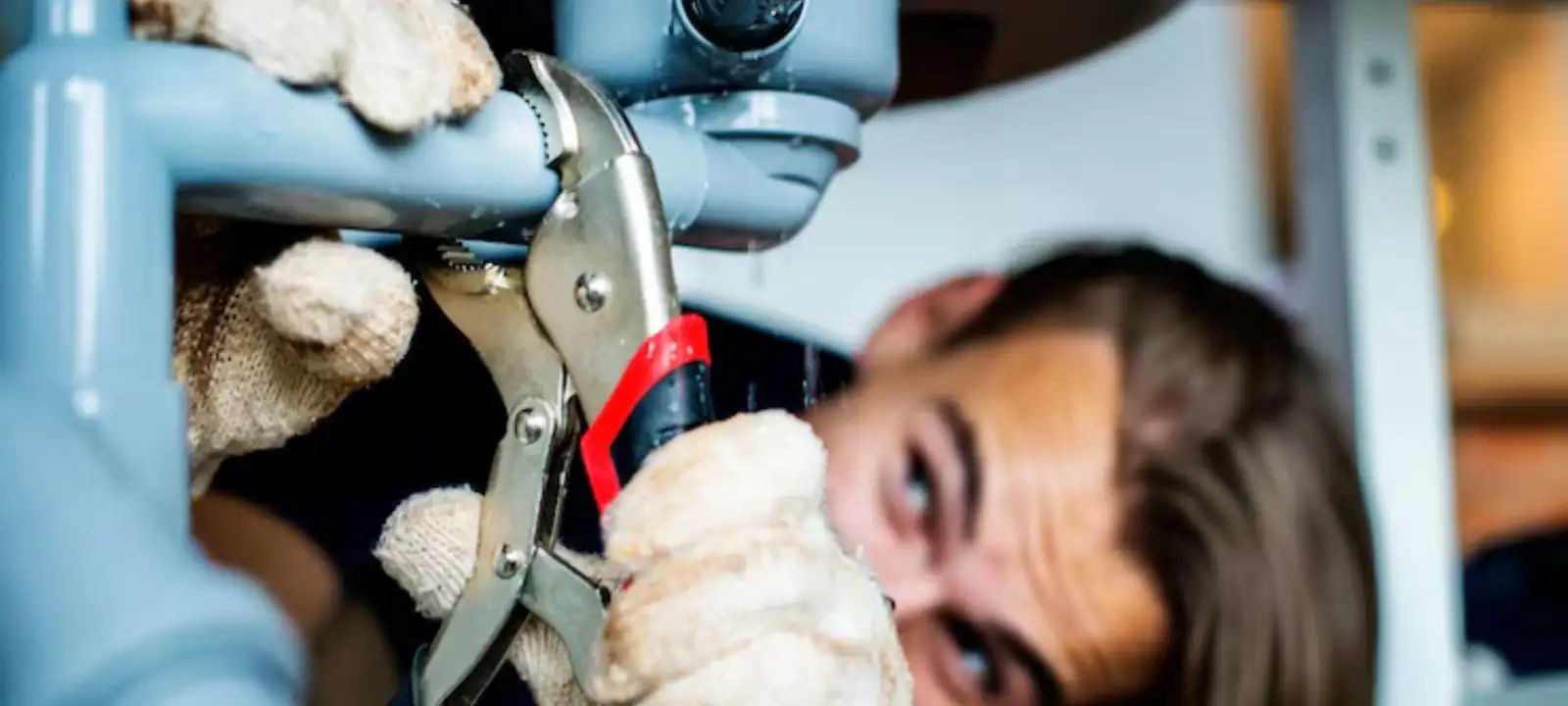
A supply line that splits under a bathroom or kitchen sink can put a gallon of water on the floor in a couple of minutes. The cabinet hides the problem, so the first sign is often a damp toe-kick, a soft spot in the flooring or a smell in the closet next door. In Aliso Viejo, where many homes and condos stack bathrooms above living space, that water rarely stays inside the cabinet.
This guide covers the first 30 minutes. It explains which valve to close, what to pull out of the cabinet, how to tell a supply leak from a drain leak and who should fix which part. If water is still running and you cannot stop it, call the 24/7 line right away and we will walk you through the next step.
Minutes one to five: stop the water
Look under the sink for two small oval or round handles. These are angle stops, one for hot and one for cold, and they sit where the supply lines leave the wall or floor. Turn each one clockwise until it stops. If a valve spins freely, will not budge or starts dripping when you touch it, leave it alone and go to the main.
The main shutoff usually sits where the water line enters the building. Look near the water heater, in the garage or on an exterior wall. Many condo units have a unit shutoff in a utility closet, and some have only a building valve controlled by the HOA. Learn where yours is on a calm day so you are not searching for it with water on the floor.
Once the valves are closed, open a faucet at the lowest point in the home to drain the pressurized line. Then watch the cabinet. If water keeps coming after every valve is closed, the source may be a drain line, a neighboring unit or a leak somewhere else, and that changes who you call.
Minutes five to fifteen: protect people, power and belongings
Under-sink spaces often hold a garbage disposal outlet, a dishwasher cord or an outlet strip. Do not touch any of that with wet hands or while standing in water. Turn off the breaker for that room only if the panel is dry and easy to reach. If you are unsure, leave the power alone and call your utility or 911 for any electrical or gas risk.
Clear the cabinet
- Lift out cleaning products, sponges, paper goods and anything stored on the cabinet floor.
- Move the trash bin and any buckets, and leave the cabinet doors open so air can reach the inside.
- Pull small rugs, shoes and cords away from the wet area.
- Take photos of the pipe, the cabinet floor and the water line on the flooring before you wipe anything.
Soak up standing water with towels and wring them into a bucket. A household vacuum is not designed for water, so skip it. A wet-dry vacuum built for liquids can help, as long as it is plugged into a dry outlet well away from the water.
Minutes fifteen to thirty: work out what kind of leak this is
Not every under-sink leak is a burst pipe, and the type matters for cleanup. A supply leak is pressurized, so it keeps flowing until you close a valve. A drain leak only happens when water goes down the sink, and it carries whatever was in the water. Appliance connections for a dishwasher or disposal add a third possibility.
| Source | How to recognize it | Likely water type | Who fixes the cause |
|---|---|---|---|
| Supply line or valve | Drips or sprays all the time, stops when the valve is closed | Category 1, clean water | Plumber |
| Faucet body or fitting | Wet along the base of the faucet, stops when valves are closed | Category 1, clean water | Plumber |
| Drain trap or drain line | Leaks only when the sink drains or the disposal runs | Category 2, gray water | Plumber |
| Dishwasher or disposal connection | Leaks only when the appliance runs | Category 2 in many cases | Plumber or appliance technician |
Categories follow the ANSI/IICRC S500 water damage standard. A technician decides the category on site, and time can raise it.
If the water came from a drain or an appliance, treat it as contaminated. Wear gloves, keep children and pets away and avoid mixing cleaning products. Contaminated water changes what can be dried in place and what has to be removed.
Why the cabinet base matters most
Most kitchen and bathroom cabinets are built with particleboard or medium-density fiberboard. Those materials soak up water like a sponge and swell at the bottom edge. Once the board swells and the laminate lifts, it does not shrink back. A cabinet base that was wet for a few hours may dry in place, while one that sat wet overnight often has to be replaced.
Water also moves sideways. It follows the pipe penetration into the wall cavity, runs under the toe-kick and spreads below the flooring. The bottom few inches of drywall behind the cabinet, the flooring edge in the next room and the subfloor under the sink are the usual hiding places. A moisture meter and a thermal camera find those wet spots without opening the whole wall.
The EPA advises drying water-damaged areas and items within 24 to 48 hours to prevent mold growth. That window is the reason to call a crew the same day for anything beyond a small spill. The first visit is also when emergency water removal pulls out the standing water and sets drying equipment.
Pipe failed and the floor is wet? The 24/7 emergency line is open now.
☎ (949) 670-0939Who fixes what
A burst pipe job involves more than one trade, and it helps to know the order. The plumber stops the leak at its source and replaces the line or valve. The restoration crew removes water, dries the structure and takes out what cannot be saved. A cabinet or flooring contractor rebuilds afterward.
- Plumber: replaces the failed supply line, valve, trap or fitting. We do not repair plumbing.
- Restoration crew: extraction, moisture mapping, drying equipment and removal of ruined materials.
- Repair contractor: replaces the cabinet base, drywall, baseboard and flooring once readings are normal. Our water damage repair page explains the rebuild.
- Landlord, property manager or HOA: authorizes work in rentals and shared walls, so tell them in writing the same day.
- Your insurer: ask what your policy says about sudden and accidental water, and keep the photos and drying readings.
What a crew does after the plumber leaves
The crew starts with moisture readings in the cabinet, the wall, the floor and the rooms that share a wall with the sink. Wet insulation and swollen drywall are cut out, and the cabinet base is removed or opened so air can reach it. Air movers and a dehumidifier run until the readings match a dry reference material.
Each visit adds a new set of readings, so the file shows a clear trend toward dry. That record is useful for an insurer, a landlord or a buyer later. We serve homes near our office and in nearby cities such as Laguna Niguel and Mission Viejo, and the same steps apply anywhere.
Common questions
Should I close the angle stop or the main valve first?
Try the angle stops under the sink first, because they stop only that fixture and leave the rest of the home with water. If they will not turn or keep leaking, close the main valve. Either way, a plumber should replace a valve that will not seal.
Will my cabinet need to be replaced?
It depends on how long the base stayed wet and what it is made of. Solid wood often dries and recovers, while particleboard that has swollen usually does not. A technician checks the cabinet with a moisture meter and tells you which parts can stay.
Who do I call in Aliso Viejo if the shutoff valve will not close?
For a fixture valve inside your home, call a plumber and close the main valve in the meantime. If the main will not close or the leak is on the utility side of the meter, call Moulton Niguel Water District. In a condo, tell your HOA or property manager, and call our 24/7 line for the water.
How soon can mold start after a pipe leak?
The EPA says to dry water-damaged areas and items within 24 to 48 hours to prevent mold growth. Wet drywall and the inside of a cabinet dry slowly, so call the same day for anything beyond a small spill.
Do you fix the pipe too?
We restore the damage the water caused and point out the likely source, but a plumber should repair the pipe. We can schedule drying around the plumbing visit so nothing is delayed.