
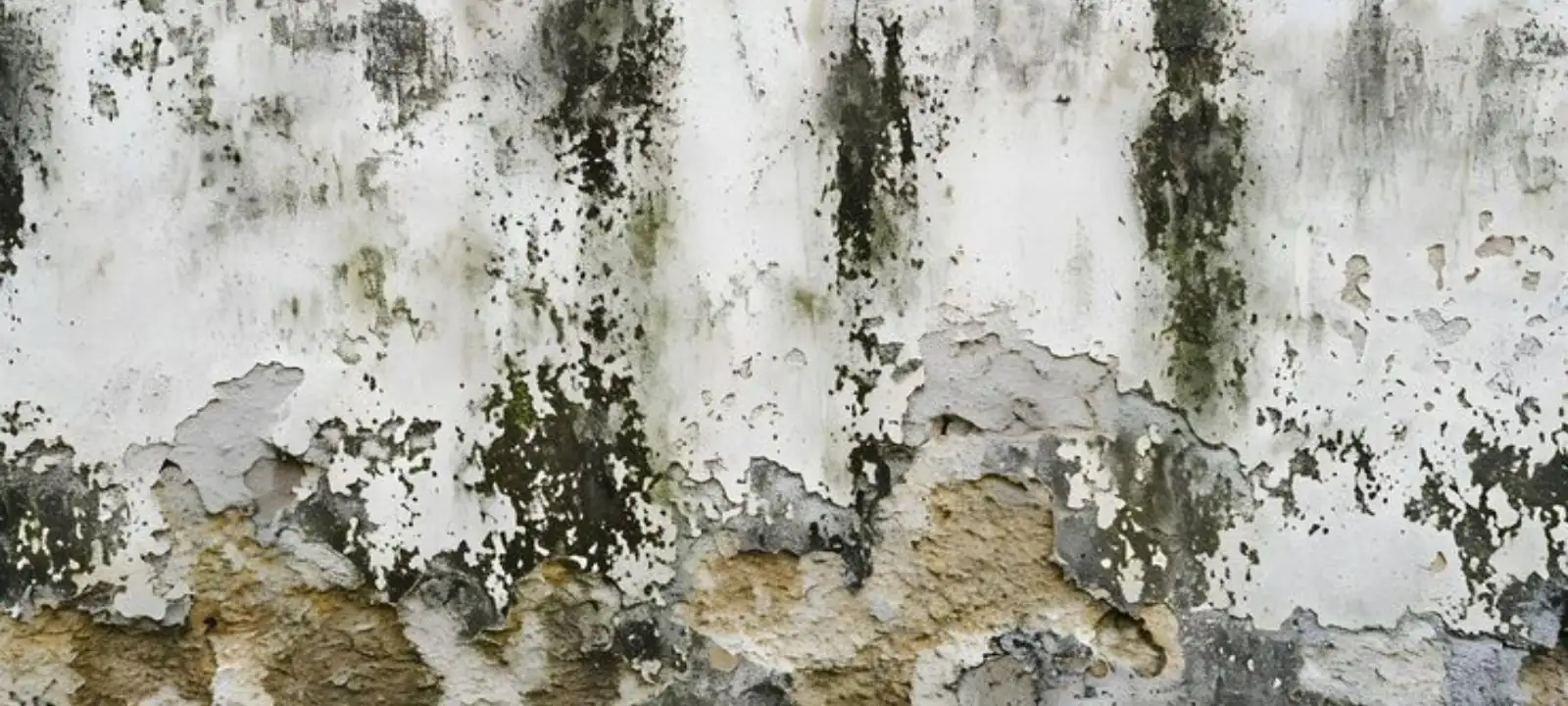
Search for black mold and you will find strong claims and scary photos. A dark spot on a wall is not a diagnosis. Mold comes in many colors, and dark staining can also be dust, soot or old water damage. What matters most is whether the wall is wet.
This guide explains how to look at a dark wall, what to avoid and when the job belongs to a crew. Health questions belong to a physician, and we do not try to answer them.
What black mold means and does not mean
People use black mold for any dark growth, and the color tells you little. Gray, green, brown and black growth can all appear in the same house, and you cannot identify a type by eye. Testing can sometimes tell more, but it does not change the first steps, which are to find the water and dry the area.
Treat any mold as a moisture problem. Mold needs moisture, so a wall with growth was wet at some point, or it is still wet.
Surface growth or inside the wall
Look at the wall from a few angles and in good light. Surface growth sits on top of the paint, often along a ceiling edge, a window corner or a bathroom wall that gets steam. Growth inside the wall shows as staining that spreads from beneath the paint, a soft spot or a wall that feels cool and damp.
| What you see | It may mean | Next step |
|---|---|---|
| Dark spots on bathroom ceiling paint | Surface growth from steam and weak ventilation | Improve ventilation, then clean per EPA guidance if small |
| Dark staining on drywall that feels soft | The drywall was wet and may be wet now | Call a crew to read moisture |
| Spots that return after cleaning | Moisture is still feeding the area | Find the source before cleaning again |
| Dark patches on a wall near plumbing | A possible leak in the wall | Call a plumber and a restoration crew |
| Dark patches along a cold exterior wall | Condensation or a roof or window leak | Check the building envelope and call a crew if wet |
Dark spots spreading on a wall? Call the 24/7 dispatch line.
☎ (949) 670-0939What not to do
Do not paint over it. Paint hides the problem and leaves the moisture in place. Do not scrub the wall dry or sand it, because that scatters dust through the room.
Do not pour bleach on a porous wall. It adds more water to the material and does nothing about the source. Do not seal the room and walk away. A wet wall needs air and drying.
Steps that help
- Find and stop the water source, whether it is a leak, a condensation problem or a failed seal.
- Photograph the wall with the date visible.
- Keep people and pets out of the room if the area is large or the wall is soft.
- Run a dehumidifier in a closed room while you wait.
- Call a crew if the area is larger than about 10 square feet, if the wall is soft or if you cannot find the source.
The EPA says homeowners can usually clean an area of less than about 10 square feet. Follow the EPA guide for cleanup steps and protective gear. Anything bigger, or anything inside a wall, belongs to a trained crew.
What a crew does
The crew reads moisture in the wall, the floor and the ceiling nearby. It opens the wall past the damp edge, removes materials that cannot be cleaned and dries the framing. The area is contained with plastic and filtered air so dust stays in the work zone.
ANSI/IICRC S520 is the published standard for mold remediation. You can ask any company whether its crews work to it. After the removal, water damage repair covers new drywall, texture and paint.
Testing is optional and separate
Some owners want testing before or after the work. An independent tester is a separate party from the contractor, and the report is only as useful as the questions it answers. Ask the tester what the report covers and which criteria it uses. Mold testing does not replace finding the water.
Bathrooms, closets and exterior walls
Dark spots show up in predictable places. Bathroom ceilings and the tops of shower walls collect steam. Closet corners on exterior walls run cooler than the rest of the room, which can let moisture settle. Walls behind toilets, sinks and washers sit next to supply lines and drains.
Knowing the room helps you guess the cause, but it does not replace a moisture reading. A fan that vents outdoors, a door left open after a shower and a quick check of the supply valves are cheap places to start. If the spots are on a wall that also feels damp, stop guessing and call.
Where we work
The same advice applies in Lake Forest and Laguna Beach, and the 24/7 line covers both. The mold remediation page explains the full process.
Common questions
Is black mold more dangerous than other mold?
Color does not tell you what kind of mold you have, and health questions belong to a physician. Treat any mold as a moisture problem, fix the source and have large areas handled by a trained crew.
Can I use bleach to kill it?
Bleach on a porous wall adds moisture and does not fix the source. For a small spot on a hard surface, follow the EPA cleanup guide. For larger areas or soft walls, call a crew.
Do I need a test to know if it is mold?
Not always. A moisture reading and a visual inspection tell you whether the area is wet and how far it extends. Testing can add information, but it does not replace finding the water.
Should I paint over it after cleaning?
Only after the wall is dry and the source is fixed. Painting over a damp wall traps moisture.
How do I check a mold contractor's license in Aliso Viejo?
Ask for a California contractor license number and look it up at cslb.ca.gov. Also ask whether the state licenses mold work and what that means for your job.