
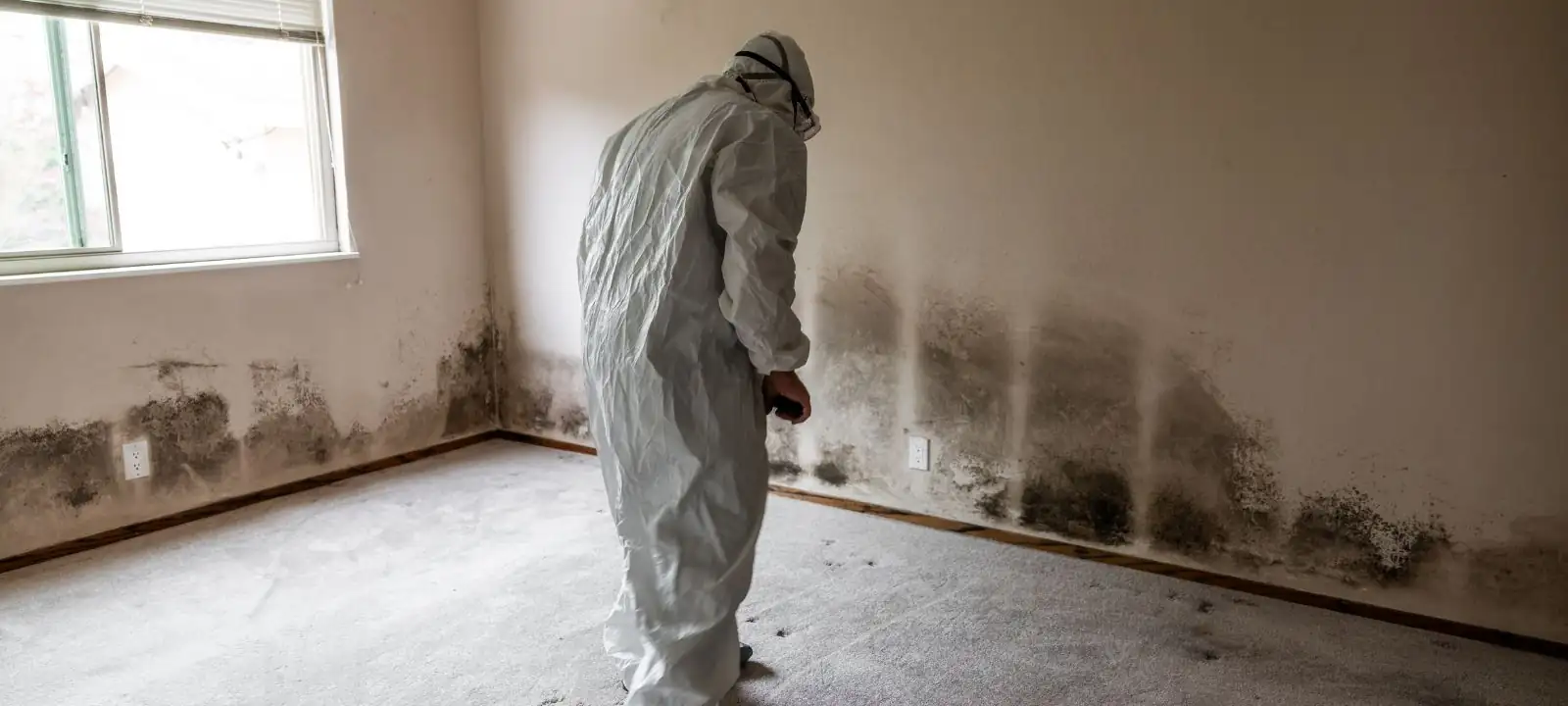
A musty garage wall, a wet storage room tucked under a staircase or a lower-level bedroom that smells damp all raise the same question. Where is the water coming from, and is it still arriving? Mold removal only makes sense once that question has an answer, because mold grows where moisture stays.
This guide is for Aliso Viejo owners and renters who have a room that sits partly or fully below the surrounding ground, along with garages and storage areas that share a slab or a retaining wall with soil. We will not pretend every home has a basement. The word gets used loosely for any room that stays cooler and damper than the rest of the house.
Which rooms count as a lower level
A true basement has a floor below grade on all or most sides. A lower level on a hillside lot may be below grade on one side and open to a yard on the other. A garage, a utility room or a storage closet beside a retaining wall can behave the same way, because soil presses against the wall and water finds the joint where the slab meets the footing.
If you are unsure whether a room is below grade, look at the outside of the wall. Soil or a planter that reaches higher than the inside floor means the wall is holding back ground, and that wall is a likely path for water.
How water reaches a below-grade room
Water takes the easiest route. Most of the time that route is a failed seal, a drain that cannot keep up or a plumbing line, not rising groundwater. The list below runs from the usual entry points to the least usual one.
- Surface water from a roof, slider or patio that drains toward the wall instead of away from it.
- A garage door threshold or lower-level door whose seal has worn out.
- A cracked supply line, an aging water heater or a washer hose in a utility room.
- A drain line or cleanout that backs up through a floor drain.
- Moisture moving through a concrete slab or block wall after long, heavy rain.
Only the last item is the groundwater problem people picture when they hear the word basement. The first four are leaks and drainage. A plumber, roofer or drainage specialist deals with those causes, and a restoration crew deals with what the water left behind.
Signs that mold has started
Look at the bottom of the wall first. Mold in a lower room usually appears along baseboards, behind stored boxes, on the underside of shelves and on the paper face of drywall that has wicked water upward. Wet cardboard, a white powdery crust on masonry and paint that bubbles all point to moisture that has been present for a while.
Smell is a useful clue. A musty odor that returns after you air out the room usually means a wet material is hiding somewhere, such as carpet pad, insulation or the back of a wall. Wiping the visible spot will not touch a smell that comes from inside the wall.
Fix the water before you touch the mold
Mold needs moisture, and removing it from a wall that keeps getting wet is wasted work. The order that holds up is short. Stop the source, dry the structure, remove and clean what is contaminated, then verify the result. Skipping the first two steps is a reliable way to end up doing the job twice.
- 1
Stop the source
Repair the leak, clear the drain or redirect the surface water that is entering the room.
- 2
Dry the structure
Use extraction, air movers and dehumidifiers until moisture readings are normal.
- 3
Contain and remove
Isolate the room and remove porous materials that cannot be cleaned.
- 4
Verify
Check the area visually and, if needed, with independent testing before closing it up.
What mold removal looks like in a lower-level room
Crews hang plastic sheeting to isolate the work area, run HEPA air filtration and set negative air so air moves into the work zone instead of out into the house. ANSI/IICRC S520 is the published standard for mold remediation, and you can ask any company whether its crews work to it. Containment keeps dust from the work from traveling into rooms that were clean.
Porous materials such as carpet, pad, insulation and wet drywall are cut out, bagged and carried away. Framing and concrete are cleaned. Hard surfaces can usually be cleaned and kept, while stored cardboard and fabric that were wet are often discarded.
| Situation | First move | Who usually handles it |
|---|---|---|
| Water is still entering | Stop the source and lift stored items off the floor | Plumber or drainage specialist for the cause, restoration crew for the water |
| Standing water, now gone | Extraction and drying with moisture readings | Restoration crew |
| Damp and musty, nothing visible | Moisture readings to find the hidden source | Restoration crew, with a plumber if a line leaks |
| Visible mold over a larger area | Containment, removal and cleaning | Mold remediation crew |
Wet lower level and unsure what comes next? The 24/7 dispatch line is open.
☎ (949) 670-0939Drying a lower level takes patience
Concrete holds water longer than wood or drywall. A slab can feel dry on top while it keeps releasing moisture into the room for some time. A dehumidifier in a closed room and a moisture meter read again every few days tell you more than the calendar does.
The EPA advises drying water-damaged areas and items within 24 to 48 hours to prevent mold growth, so the first days matter most. Our water mitigation service exists for that stage. Do not close the room back up until readings are normal, because new drywall over a damp wall starts the problem again.
What you can handle and what to hand off
The EPA says cleanup is usually something a homeowner can do if the moldy area is less than about 10 square feet, once the moisture problem is fixed. A lower room with several patches, a musty smell throughout or wet insulation is past that point. The signs below mean it is time to call a crew.
- Mold covers more than a small patch or appears on more than one wall.
- Drywall, insulation or carpet pad stayed wet for more than a day or two.
- The water came from a toilet, drain or sewer.
- You cannot find the source of the moisture.
- The musty smell returns after you clean.
Renters, condos and shared walls
If you rent or live in a condo, the garage or storage room may belong to the HOA or the owner. Write to the property manager the same day, attach dated photos and ask who authorizes work. Keep a copy of every message, because a clear paper trail speeds up the repair.
Homes on canyon-edge lots near Laguna Beach deal with slope drainage that city documents describe at length. Homeowners in Laguna Niguel can use the same checklist, and the 24/7 line covers both cities. Once the area is clean, the mold remediation page explains testing and clearance.
Common questions
Do Aliso Viejo homes have basements?
We cannot say how common basements are, because no source we trust counts them. What matters is whether a room on your property sits below the outside ground level. Check the outside wall of the room and look at where the soil or planter stops.
Can I remove mold from my garage myself?
The EPA says homeowners can usually handle an area of less than about 10 square feet once the moisture problem is fixed. Larger areas, mold inside walls and anything that follows sewage or flood water should go to a trained crew.
How long should a lower room be dry before it is closed up?
Until moisture readings of the wall and floor match readings from a dry reference area. The number of days varies with the materials, the humidity and the equipment. Your technician should share the readings with you.
Who do I contact about flood zones for my Aliso Viejo address?
Use the FEMA flood map for your address and ask the City of Aliso Viejo Public Works department at (949) 425-2533, which is listed as the floodplain contact.
Should I run a dehumidifier while I wait for a crew?
A dehumidifier in a closed room can help, but it does not replace extraction, moisture mapping or removal of wet materials. Keep the door shut, empty the tank often and tell the crew how long it ran.