
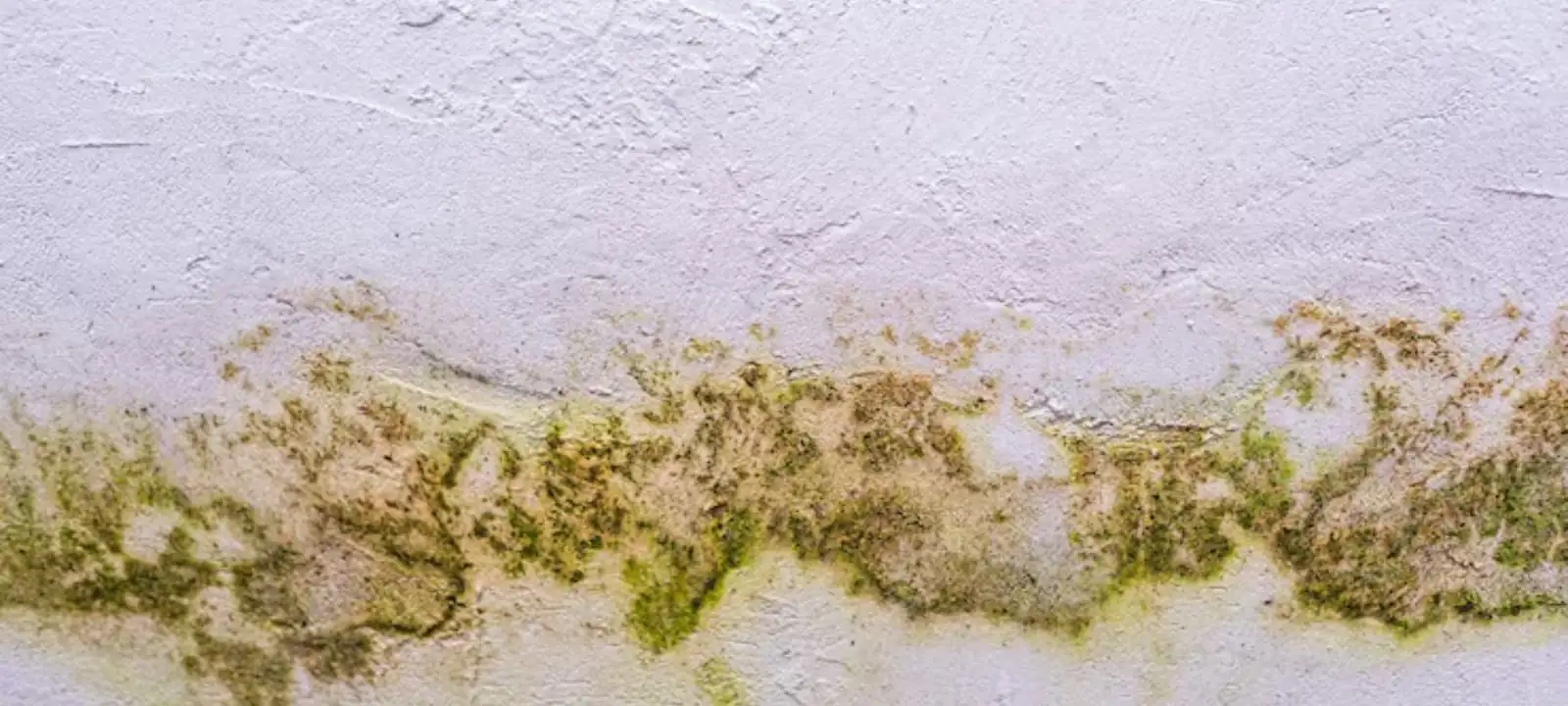
An air conditioner pulls moisture out of the air as it cools your home, and that water has to go somewhere. Most systems send it down a small drain line to a drain, a pan or the outdoors. When the line clogs, the water backs up and spills into a closet, an attic or the ceiling below, and the leak can run unnoticed for weeks.
How a condensate line works
Cooling air makes water vapor condense on the evaporator coil, much like water on a cold glass. The water drips into a pan and leaves through the condensate drain line. Many systems also have a secondary pan or a float switch that shuts the unit off when water rises, but not every system has one, and switches can fail.
Algae, dust and debris can narrow the line over time. When it clogs, the water has nowhere to go except over the edge of the pan and into whatever sits below it.
Signs your condensate line is leaking
- A stain on the ceiling under an attic air handler or in a hallway near a closet unit.
- Damp carpet, flooring or baseboard near the air handler.
- Water standing in the pan or around the base of the unit.
- A musty smell that appears when the air conditioner runs.
- A system that stops cooling or shuts itself off.
- Drywall near the unit that feels soft or looks discolored.
This water starts out clean, so the damage often looks minor. The trouble is volume and time. A line that drips a little during every cooling cycle adds up to a lot of water over a few weeks, and it soaks insulation and drywall that nobody checks.
What to do first
First steps when you find water near the air handler
- Turn the air conditioner off at the thermostat so it stops making more water.
- If water is near the unit electrical connections, stay back. Cut power at the breaker only if you can reach the panel while standing on dry ground.
- Soak up standing water with towels or a wet-dry vacuum for small spills.
- Photograph the unit, the pan, the stain and the surrounding walls before anything is moved.
- Call an HVAC technician to clear the line and check the pan and float switch.
- Call a restoration crew if insulation, drywall, carpet or trim is wet.
Who fixes what
Two trades usually share this job, and each does something the other does not. The HVAC technician repairs the equipment and the drain. The restoration crew deals with the building materials the water reached. The table lays out the split.
| Problem | HVAC technician | Restoration crew |
|---|---|---|
| Clogged drain line | Clears the line and checks the pan and float switch | Not needed unless water spread |
| Water in the pan only | Cleans and tests the system | Not needed |
| Wet insulation or drywall | Outside their scope | Moisture readings, drying and removal of wet materials |
| Visible mold on a ceiling or closet wall | Outside their scope | Containment and mold remediation after the leak is fixed |
Water from an AC unit in your walls? Call the 24/7 dispatch line.
☎ (949) 670-0939Why this leak matters for mold
Mold needs moisture, and a condensate leak delivers it on a schedule. Every cooling cycle adds water to a spot that is warm, enclosed and slow to dry. The EPA advises drying water-damaged areas and items within 24 to 48 hours to prevent mold growth, and a slow leak that runs for weeks leaves no such window.
That does not mean every stain hides mold. A technician with a moisture meter and a thermal camera can tell you how far the water traveled and whether the materials are still wet. Opening a small inspection hole shows what is behind the paint.
What a restoration visit looks like
The crew starts by reading moisture in the drywall, framing, insulation and flooring around the unit. Wet insulation is removed because it holds water and dries slowly. Wet drywall is cut out past the damp edge, and the cavity is dried with air movers and dehumidifiers.
If mold is present, the work is contained and the contaminated materials are removed under ANSI/IICRC S520 practice, which is a published industry standard. You can ask any company whether its crews work to it. The mold remediation page explains testing, containment and clearance.
Attic, closet or ceiling: where the water goes
An attic unit leaks onto the insulation and then onto the ceiling below, so the stain often shows in a hallway or bedroom, away from the equipment. A closet unit leaks onto the carpet, the baseboard and the bottom of the wall. A unit above another home in a condo building can wet a neighbor first.
If you share walls or floors with other homes, tell the HOA or property manager the same day and ask who authorizes drying in shared areas. Give them dated photos and the HVAC repair record.
Making a repeat easier to catch
No habit removes the risk, but a few make a clog easier to spot early. Ask the HVAC technician to inspect the drain line and pan at each service visit. Know where the float switch is. Glance at the ceiling under an attic unit when you change the filter, and do not ignore a system that shuts off for no clear reason.
The same steps apply if you live in Mission Viejo or Lake Forest, and the 24/7 line covers both. If you are not sure whether the damage needs drying or only an HVAC fix, water mitigation explains how moisture is mapped.
Common questions
Can a clogged AC drain line cause mold?
A leak can supply the moisture that mold needs. If water spreads into insulation, drywall or carpet and stays wet, mold can follow. Stopping the leak and drying the materials quickly lowers that risk.
Should I keep the air conditioner running while I wait for the HVAC technician?
Turn it off at the thermostat so it stops making more water. Running it with a clogged line pushes more water into the pan and over the edge.
Does homeowners insurance cover a condensate line leak?
The California Department of Insurance says a homeowners policy does not usually cover moisture, mildew or mold damage that could have been avoided. Policies differ, so check yours or ask your insurer.
Do I call the HVAC technician or the restoration company first?
Call the HVAC technician to stop the leak, and call a restoration crew if materials are wet. They can work the same day, and our line is open 24/7 if the water is spreading.
Do I need to tell my HOA about a condensate leak in my Aliso Viejo condo?
Yes, in writing, the same day. Include photos and the repair record, and ask who authorizes drying in shared walls and ceilings.